202512/26
Facing global climate challenges, Tunghai University has responded to the issues of our time through educational initiatives. In collaboration with its Japanese sister schools—Konan University and Aichi Prefectural University—Tunghai launched the “Intergenerational Japanese Learning Camp,” attracting 60 participants from the central Taiwan region. The program adopts the Content and Language Integrated Learning (CLIL) approach, promoting sustainable learning and international collaboration through language education.

.jpg)
Tunghai University partnered with its Japanese sister universities, Konan University and Aichi Prefectural University, to host the “Intergenerational Japanese Language Learning Camp.”
The Department of Japanese at Tunghai University recently held the “2025 Tunghai × Konan × Aichi Prefectural University Japanese Learning Camp,” integrating the United Nations Sustainable Development Goals (SDGs) with a focus on “Responsible Tourism” (SDG 12) and “Climate Action” (SDG 13). Using CLIL as the core instructional model, the camp emphasized learning language through meaningful content, guiding learners to use language as a tool to understand the world and express their ideas.Department Chair Yu-Shan Chang stated that Tunghai University continues to promote SDG-oriented language education. Through international collaboration and interdisciplinary teaching, the university aims to make language the starting point for action and to cultivate a new generation of citizens with global vision and social responsibility.
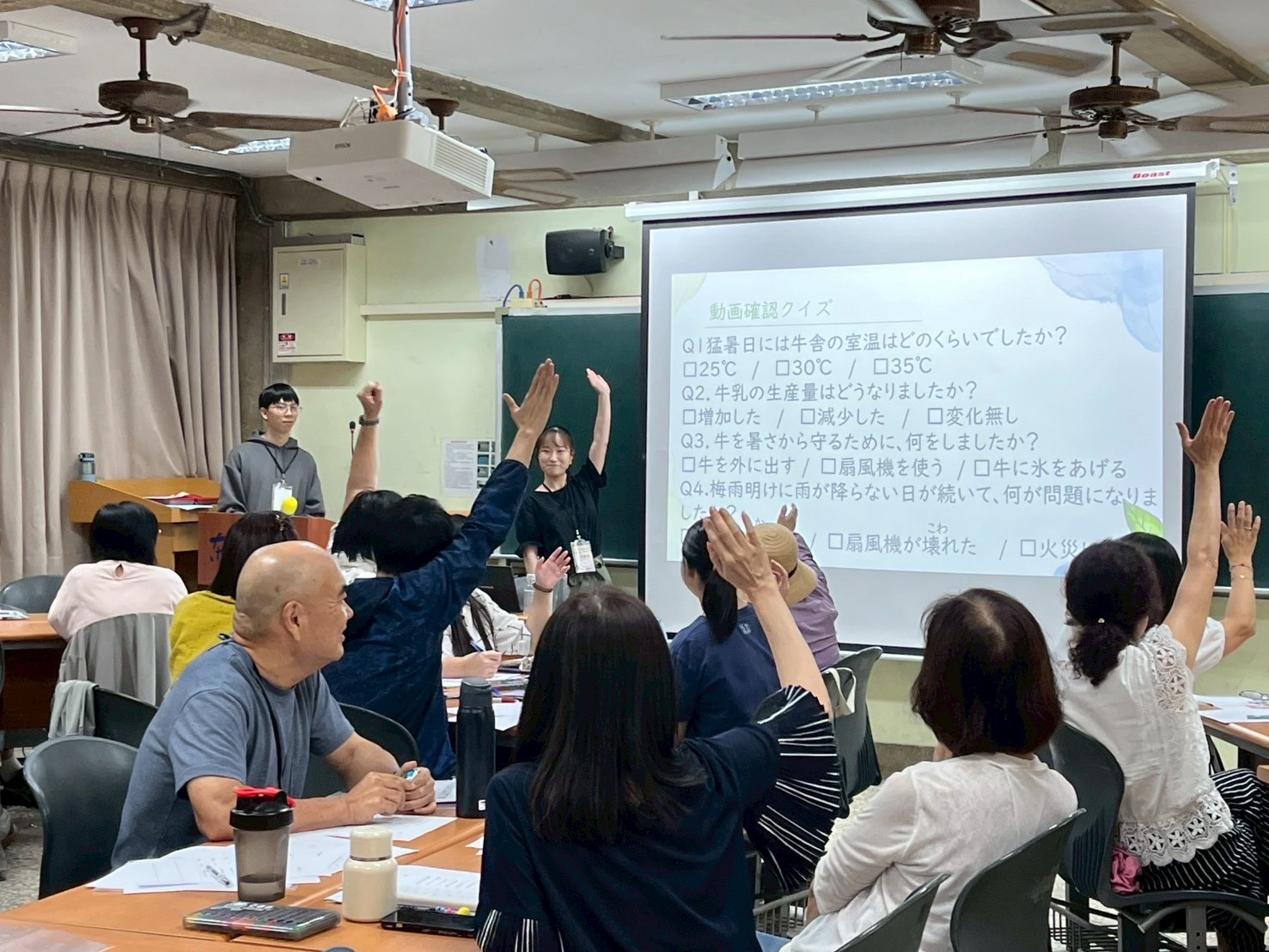

Integrating the United Nations Sustainable Development Goals (SDGs), the program focused on “Responsible Tourism” (SDG 12) and “Climate Action” (SDG 13), adopting a CLIL approach to practice sustainable learning and international collaborative learning through language education.
According to Chang, this year’s camp featured six teaching interns from the Department of Japanese and the International Business Administration Program at Tunghai University, who collaborated with four interns from Konan University and five from Aichi Prefectural University to co-design the curriculum. Beginning in April 2025, students from the three universities worked together online, engaging in cultural exchange, course planning, and teaching rehearsals, demonstrating strong cross-border teamwork and innovative spirit. The curriculum integrated real-life contexts with social issues: the beginner-level lessons used travel dialogues to guide learners in considering the environmental impact of tourism and how to plan sustainable itineraries; the advanced-level lessons explored Japan’s unusual heat waves and climate anomalies, leading learners to examine how global warming affects agriculture, rainfall, and extreme weather, while also discussing carbon-reduction actions and ways to prevent heatstroke.
.jpg)

Group photo of interns.
Chang further noted that the camp not only improved learners’ Japanese abilities but also encouraged reflection on travel ethics and the climate crisis. One participant shared, “While learning Japanese, I am also learning how to communicate with the world and how to take responsibility for our planet.” A particularly meaningful highlight this year was the participation of a fully blind learner, who actively joined group discussions and expressed great satisfaction with the integration of social issues into language learning. Chang added that this experience prompted student interns to rethink their teaching strategies to ensure greater inclusivity and broader participation in the classroom.
